HRLUX Lighting | Éclairer le monde, alimenter l'avenir

qu'est-ce que tu cherches
?
DEMANDER UN DEVIS

HRLUX Lighting | Éclairer le monde, alimenter l'avenir
Choisir un projecteur d'extérieur est plus simple lorsqu'on comprend la signification de son indice de protection IP. IP65, IP66 et IP67 sont des indices d'étanchéité courants pour les projecteurs, mais ils ne sont pas interchangeables pour toutes les installations. Ce guide répond concrètement à la question que se posent de nombreux acheteurs : « Quelle est la différence entre les indices d'étanchéité IP65, IP66 et IP67 pour les projecteurs ? » Vous pourrez ainsi adapter votre projecteur à la pluie, au lavage, à la poussière et aux projections d'eau temporaires, sans risquer de surdimensionner ou de sous-protéger votre installation.
L'indice de protection IP décrit le niveau de protection contre les infiltrations offert par un boîtier électrique. En termes simples, il indique dans quelle mesure le boîtier du projecteur résiste aux corps solides (poussière, par exemple) et aux liquides (eau, par exemple). La norme CEI 60529 définit le code IP pour les boîtiers d'équipements électriques ; son format utilise « IP » suivi de deux chiffres caractéristiques. (webstore.iec.ch)
Pour les projecteurs, le premier chiffre est important car les luminaires extérieurs sont exposés à la poussière, aux gravillons, aux insectes et aux débris de chantier. Le second chiffre est important car le luminaire peut être exposé à la pluie, aux jets d'eau des arroseurs automatiques, au nettoyage au tuyau d'arrosage, au ruissellement des eaux pluviales ou à des accumulations d'eau occasionnelles. Lorsque vous voyez IP65, IP66 ou IP67, le « 6 » indique que le luminaire est étanche à la poussière, tandis que le second chiffre indique le niveau de protection contre l'eau. (intertek.com)
Cette distinction est importante. Une certification n'est pas une vague promesse d'étanchéité. Il s'agit d'une méthode normalisée pour communiquer le niveau de protection du boîtier dans des conditions de test définies. Dans la pratique, cela permet aux entrepreneurs, aux gestionnaires d'installations et aux particuliers de comparer les produits avec plus d'assurance.
La différence pratique réside dans le type et l'intensité d'exposition à l'eau que chaque indice de protection est conçu pour supporter. L'indice IP65 protège contre les jets d'eau, l'indice IP66 contre les jets d'eau plus puissants et l'indice IP67 contre l'immersion temporaire. Ces trois indices sont étanches à la poussière lorsqu'ils commencent par le chiffre « 6 ». (intertek.com)
L'indice de protection IP65 convient généralement aux projecteurs extérieurs exposés à la pluie et aux intempéries. Il est souvent choisi pour les façades de bâtiments, les allées, les jardins, les zones de chargement et l'éclairage de sécurité général, là où le luminaire peut être mouillé mais n'est pas régulièrement nettoyé au nettoyeur haute pression ni immergé.
L'indice de protection IP66 offre une meilleure résistance aux jets d'eau puissants. Ceci peut s'avérer utile pour les sites industriels, les exploitations agricoles, les abords des stations de lavage automobile, les zones maritimes ou les sites où les équipes de nettoyage peuvent être amenées à rincer le matériel et les murs au tuyau d'arrosage.
L'indice de protection IP67 est différent car il se concentre sur l'immersion temporaire plutôt que sur la force des projections d'eau. Il peut convenir lorsqu'un luminaire risque d'être brièvement recouvert d'eau, installé près du sol ou exposé à un risque d'inondation de courte durée, mais il ne doit pas être systématiquement considéré comme le meilleur indice pour tous les environnements à forte projection d'eau.
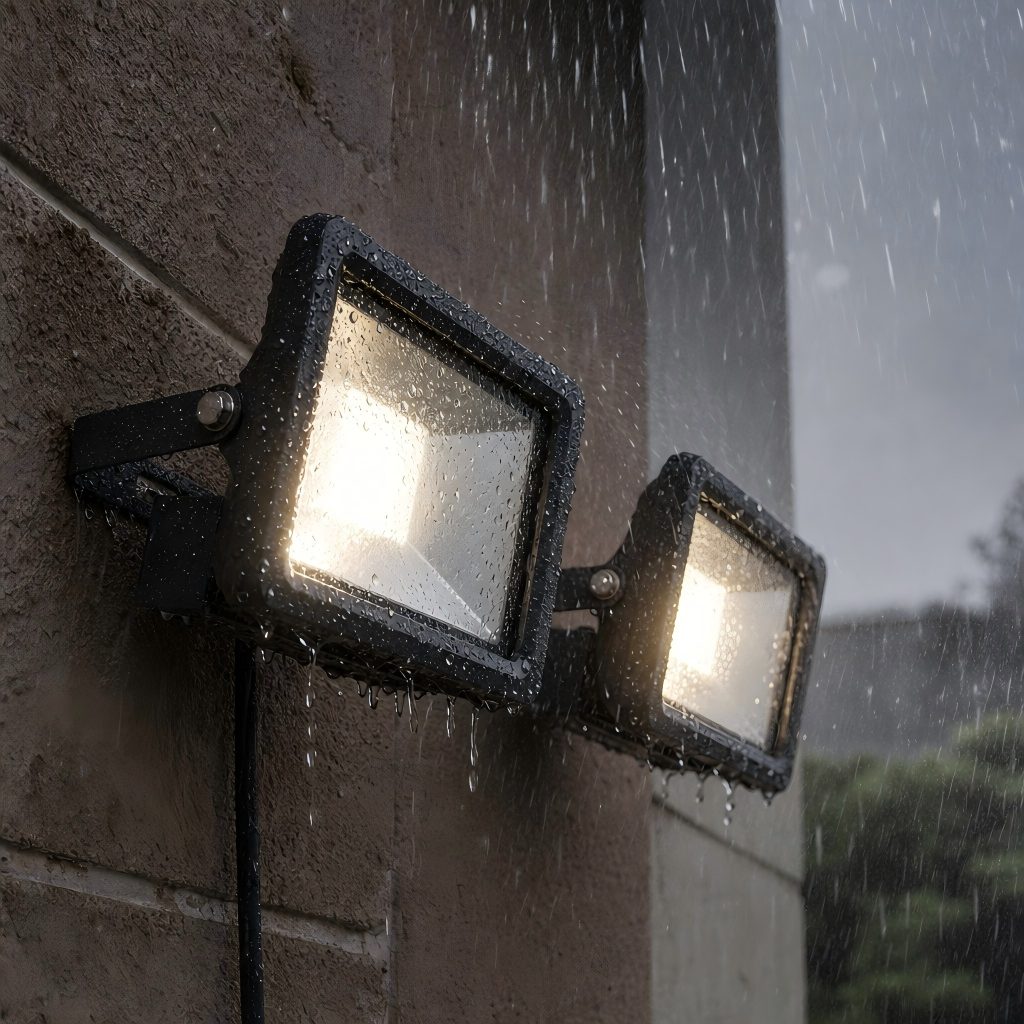
Dans les indices IP65, IP66 et IP67, le premier chiffre est le même : 6. Cela signifie que le boîtier est étanche à la poussière. Pour les projecteurs, cela contribue à protéger les composants internes des fines particules qui peuvent s’accumuler autour des joints, des lentilles, des drivers et des compartiments de câblage.
La protection contre la poussière est particulièrement importante sur les chantiers, dans les entrepôts, les parkings, les exploitations agricoles, le long des routes côtières et dans les climats secs où le vent peut projeter des gravillons dans les moindres interstices. Un boîtier étanche à la poussière contribue à réduire la contamination à l'intérieur du luminaire, ce qui garantit un fonctionnement plus fiable et durable. L'aspect esthétique est également important : la poussière à l'intérieur d'une lentille ou d'un boîtier peut altérer la clarté de la lumière et donner une impression de négligence.
Cependant, étanche à la poussière ne signifie pas sans entretien. Les joints peuvent vieillir, les fixations peuvent se desserrer et une installation incorrecte peut compromettre l'étanchéité du boîtier. La certification s'applique au produit tel que conçu et testé, et non à un appareil endommagé, percé, ouvert incorrectement ou installé avec une étanchéité des câbles défectueuse.
C’est le deuxième chiffre qui distingue réellement les normes d’étanchéité IP65, IP66 et IP67. Un chiffre plus élevé ne signifie pas toujours « meilleur » dans toutes les situations réelles ; cela signifie simplement que l’étanchéité a été testée face à un type d’exposition à l’eau différent.
Pour l'indice IP65, le deuxième chiffre « 5 » indique une protection contre les jets d'eau. Pour l'indice IP66, le « 6 » indique une protection contre les jets d'eau puissants. Pour l'indice IP67, le « 7 » indique une protection contre les effets d'une immersion temporaire. (intertek.com)
C'est là que beaucoup d'acheteurs commettent une erreur simple mais coûteuse. Ils supposent qu'un indice de protection IP67 est forcément supérieur à un indice IP66 dans tous les environnements humides, car 67 est numériquement supérieur à 66. En pratique, l'indice IP67 concerne l'immersion, tandis que l'indice IP66 concerne les jets d'eau puissants. Si votre projecteur est exposé à des jets d'eau puissants, l'indice IP66 sera peut-être plus pertinent que l'indice IP67, à moins que le produit ne bénéficie des deux niveaux de protection.
Les projecteurs IP65 constituent un choix pratique pour la plupart des applications d'éclairage extérieur standard. Conçus pour une protection étanche à la poussière et une résistance aux jets d'eau, ils conviennent à de nombreux environnements résidentiels, commerciaux et industriels légers.
Les utilisations courantes comprennent :
Éclairage de sécurité résidentiel : allées, garages, patios, cours latérales et entrées où la pluie et le vent sont les principaux risques.
Extérieurs commerciaux : façades de magasins, façades d’immeubles, allées piétonnes et éclairage d’enseignes exposés aux intempéries.
Espaces paysagers et jardins : Endroits où les arroseurs automatiques ou la pluie peuvent atteindre le dispositif, mais où l’eau stagnante est peu probable.
Éclairage de stationnement et de périmètre : lampadaires ou luminaires muraux nécessitant une protection extérieure fiable sans exigences particulières de lavage.
L'emplacement est primordial. Un projecteur IP65 installé sous un avant-toit ou en hauteur sur un mur est généralement confronté à des problèmes d'humidité très différents de ceux d'un projecteur installé au niveau du sol, près des caniveaux. Si l'eau peut stagner autour du luminaire, ou si les équipes de nettoyage utilisent régulièrement un jet d'eau puissant, il est préférable d'opter pour un indice de protection supérieur ou plus spécifique.
Les projecteurs IP66 sont conçus pour résister à une forte exposition à l'eau, notamment aux projections d'eau puissantes. L'indice de protection IP66 est généralement considéré comme un excellent choix pour les environnements extérieurs et semi-industriels exigeants, car il allie une construction étanche à la poussière à une protection contre les jets d'eau puissants. (intertek.com)
Cela peut avoir des conséquences importantes dans des lieux tels que les quais de chargement, les usines, les aires de service à proximité des restaurants, les granges, les parcs de transport, les ateliers et les bâtiments côtiers exposés. Dans ces endroits, l'eau ne tombe pas simplement sous forme de pluie. Elle peut tomber de différentes directions, être apportée par la pression du vent ou provenir du nettoyage courant.
L'indice IP66 est également utile lorsque les luminaires sont installés suffisamment bas pour être exposés aux projections d'eau provenant de véhicules, de tuyaux d'arrosage ou d'équipements environnants. Un projecteur fixé sur un mât élevé peut principalement nécessiter une résistance à la pluie. En revanche, un projecteur fixé au mur à côté d'une aire de lavage devra résister à un contact avec l'eau beaucoup plus important.
Les projecteurs IP67 sont conçus pour une protection contre l'immersion temporaire. De ce fait, l'indice de protection IP67 est utile dans les zones où un luminaire peut être brièvement immergé, éclaboussé par le bas ou exposé à de l'eau stagnante pendant une courte période. Il est particulièrement pertinent pour certaines installations au sol, paysagères, en tunnel, en bord de quai ou en zones inondables.
Cependant, la norme IP67 n'implique pas automatiquement que le produit est conçu pour une utilisation permanente sous l'eau. Il est important de faire la distinction : une immersion temporaire est différente d'une submersion continue. Si une lampe doit fonctionner sous l'eau ou rester immergée pendant de longues périodes, il convient de choisir un produit spécifiquement conçu et documenté à cet effet.
Il est également important de vérifier si le luminaire possède plusieurs indices de protection contre l'eau ou seulement IP67. Certains produits peuvent être testés pour l'immersion, mais pas pour les jets puissants. Si votre environnement comprend à la fois un lavage fréquent et une immersion temporaire possible, consultez attentivement la documentation du fabricant plutôt que de choisir uniquement en fonction de l'indice le plus élevé.
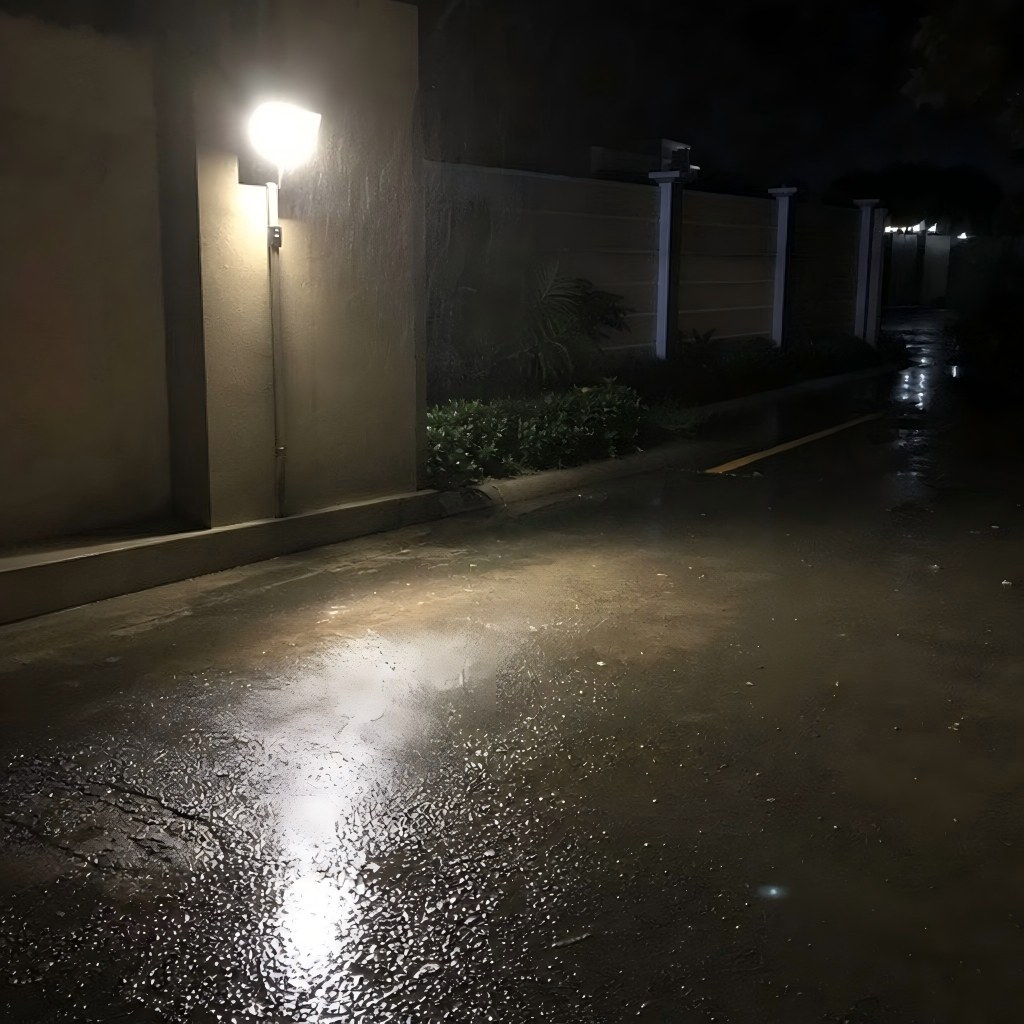
La meilleure note dépend de l'environnement, et pas seulement du chiffre indiqué sur la fiche produit. Avant de choisir, réfléchissez à la manière dont l'eau et la poussière atteindront le luminaire.
Utilisez cette liste de contrôle :
Identifiez la principale source d'eau. S'agit-il de pluie, d'arrosage automatique, de nettoyage au tuyau d'arrosage, de lavage à haute pression, d'éclaboussures de véhicules ou d'une inondation temporaire ?
Observez l'emplacement de fixation. Les fixations murales et sur poteaux en hauteur sont souvent exposées à la pluie et au vent. Les luminaires au niveau du sol sont exposés aux flaques d'eau, à la boue et aux éclaboussures.
Tenez compte des procédures de nettoyage. Si le personnel rince les murs, les sols, les machines ou les véhicules à proximité, un indice de protection IP66 peut être plus approprié qu'un indice IP65.
Vérifiez le drainage. Même un bon luminaire extérieur peut être mis à rude épreuve s'il est installé à un endroit où l'eau stagne autour des entrées de câbles ou des bases de fixation.
Consultez la documentation du produit. Vérifiez l'indice de protection IP exact, le sens d'installation, les exigences relatives aux presse-étoupes et les éventuelles exclusions du fabricant.
Pensez aux conditions à long terme. L'exposition aux UV, l'air salin, les vibrations, les chocs et les variations de température peuvent affecter les joints et les pièces métalliques au fil du temps.
Pour de nombreux projets courants, l'indice IP65 constitue une bonne base pour une utilisation en extérieur. En cas de projections d'eau et de lavages plus intensifs, l'indice IP66 est souvent plus sûr. Dans les zones présentant un risque d'immersion temporaire, l'indice IP67 devient plus pertinent, à condition que le luminaire soit installé conformément aux spécifications.
Même un projecteur de haute qualité peut tomber en panne s'il est mal installé. L'indice d'étanchéité du boîtier suppose que les joints, les couvercles, les entrées de câbles, les vis et les points de fixation sont intacts et correctement ajustés. Un presse-étoupe desserré, un joint manquant, une lentille fissurée ou une gaine mal inclinée peuvent permettre à l'eau de s'infiltrer malgré l'indice d'étanchéité annoncé.
Une bonne installation implique de serrer les raccords conformément aux instructions du fabricant, d'éviter de percer des trous inutiles dans le boîtier, d'utiliser des connecteurs adaptés à l'extérieur et de positionner les entrées de câbles de manière à limiter les infiltrations d'eau. Si le luminaire est équipé d'une boîte de jonction, celle-ci doit également être correctement protégée contre les infiltrations. Un projecteur puissant ne peut compenser un point de connexion fragile à proximité.
L'entretien est également important. Les luminaires extérieurs doivent être inspectés régulièrement afin de détecter tout joint endommagé, corrosion, fissure de la lentille, obstruction du drainage autour du support et présence d'eau à l'intérieur du boîtier. Ceci est particulièrement important dans les environnements difficiles tels que les sites côtiers, les exploitations agricoles, les zones industrielles et les zones commerciales à fort trafic.
Le terme « étanche » peut prêter à confusion car il est souvent employé de manière générique. Les indices de protection IP sont plus précis, mais leur signification reste essentielle.
Quelques points à retenir :
« Étanche » ne signifie pas toujours submersible. Un projecteur IP65 résiste aux jets d'eau, mais cela ne signifie pas qu'il doit être immergé dans une flaque d'eau.
Un chiffre plus élevé pour le deuxième indice n'est pas toujours synonyme de meilleure protection. L'indice IP67 garantit une immersion temporaire, tandis que l'indice IP66 résiste aux jets d'eau puissants.
L'ensemble du système est important. Les presse-étoupes, les boîtes de jonction, les supports et l'angle d'installation peuvent avoir une incidence sur la protection réelle.
Les indices de protection IP ne garantissent pas la résistance aux chocs. Ils n'indiquent pas si un luminaire peut résister aux chocs, au vandalisme ou aux fortes vibrations.
L'aptitude au travail en extérieur ne se limite pas à l'étanchéité. La gestion de la chaleur, la résistance à la corrosion, la sécurité électrique, les propriétés optiques et la robustesse de la fixation sont également importantes.
Ces détails vous permettent de comparer plus judicieusement les normes d'étanchéité. Au lieu de choisir la valeur la plus élevée, privilégiez celle qui correspond au risque réel.
Les projecteurs IP65, IP66 et IP67 offrent tous une protection élevée contre les infiltrations, mais ils répondent à des besoins différents. Choisissez l'IP65 pour une exposition classique à la pluie et à la poussière en extérieur, l'IP66 pour les zones exposées à des jets d'eau puissants et au lavage fréquent, et l'IP67 pour les endroits où une immersion temporaire est possible.
Le choix le plus judicieux consiste à adapter la puissance de vos projecteurs à leur environnement d'installation. Avant tout achat, tenez compte de la direction du jet, de la force de pulvérisation, de la hauteur de montage, du drainage et de l'accessibilité pour la maintenance. Lorsque la puissance, la conception du produit et la qualité de l'installation sont parfaitement compatibles, vos projecteurs seront bien mieux préparés aux conditions extérieures réelles.
Q1. Quelle est la principale différence entre IP65, IP66 et IP67 ?
L'indice IP65 protège contre les jets d'eau, l'IP66 contre les jets d'eau puissants et l'IP67 contre l'immersion temporaire. Ces trois indices sont étanches à la poussière, mais chacun garantit un niveau d'exposition à l'eau différent.
Q2. Quand dois-je choisir l'indice IP65 pour les projecteurs ?
L'indice IP65 convient à une utilisation extérieure standard où les principaux problèmes sont la pluie, le vent et la poussière, comme par exemple pour l'éclairage de sécurité domestique, les extérieurs commerciaux et les parkings en général.
Q3. L'IP67 est-il toujours meilleur que l'IP66 ?
Pas nécessairement. L'indice IP67 garantit une immersion temporaire, tandis que l'indice IP66 protège contre les jets d'eau puissants. Si le luminaire est exposé au nettoyage au jet d'eau ou à des projections d'eau importantes, l'indice IP66 sera plus approprié, sauf si le produit possède les deux indices de protection.
Q4. Un indice IP élevé garantit-il une étanchéité parfaite ?
Non. Cet indice de protection n'est valable que si le luminaire est installé correctement, avec des joints, des presse-étoupes et des boîtes de jonction intacts. Une mauvaise installation ou des joints endommagés peuvent laisser passer l'eau, quel que soit l'indice de protection.
HRLUXSOLAR se concentre sur éclairage extérieur de moyenne à haute gamme Avec des normes de qualité strictes et une équipe rigoureuse et responsable, nous plaçons la qualité au cœur de notre démarche et le professionnalisme sur le fondement de la fourniture de produits d'éclairage extérieur stables et durables. Spécialisés dans les services professionnels pour les projets d'ingénierie municipaux et commerciaux, nous proposons des solutions d'éclairage personnalisées pour une mise en œuvre réussie. Nous offrons une personnalisation flexible, une livraison efficace et un accompagnement technique complet pour répondre aux exigences de chaque projet. Engagés à être votre partenaire de confiance en éclairage extérieur, HRLUXSOLAR s'efforce constamment d'améliorer la qualité de l'éclairage de vos projets.
Obtenir un devis
Scannez vers WeChat/WhatsApp :